


Imagine this
Imagine the massive amount of data a company generates daily. Every time you buy something online, swipe your credit card, or even just browse a website, you’re generating data. Companies collect it, store it, and hopefully use it to make better decisions. The challenge? Raw data is like crude oil 🛢️, important but useless until refined. Many businesses collect massive amounts of information but struggle to clean, structure, and extract value from it, leaving data siloed, messy, and underutilized.
A well-structured approach to data can be a game changer. Imagine a retailer knowing exactly what products will sell before they even hit the shelves or a hospital predicting disease outbreaks based on patient data. When managed properly, data helps businesses track performance, spot trends, and make better decisions. And AI? Well, it’s just the icing on the cake (la cerise 🍒 sur le gâteau 🍰, for the French), powered entirely by clean and well-organized data.
The thing is, turning raw data into value requires more than simply collecting it. This guide covers the key fundamentals every data practitioner should know, from understanding data and its lifecycle to analytics, AI, and the foundations that make them work.
How It Works: The 6 Vs
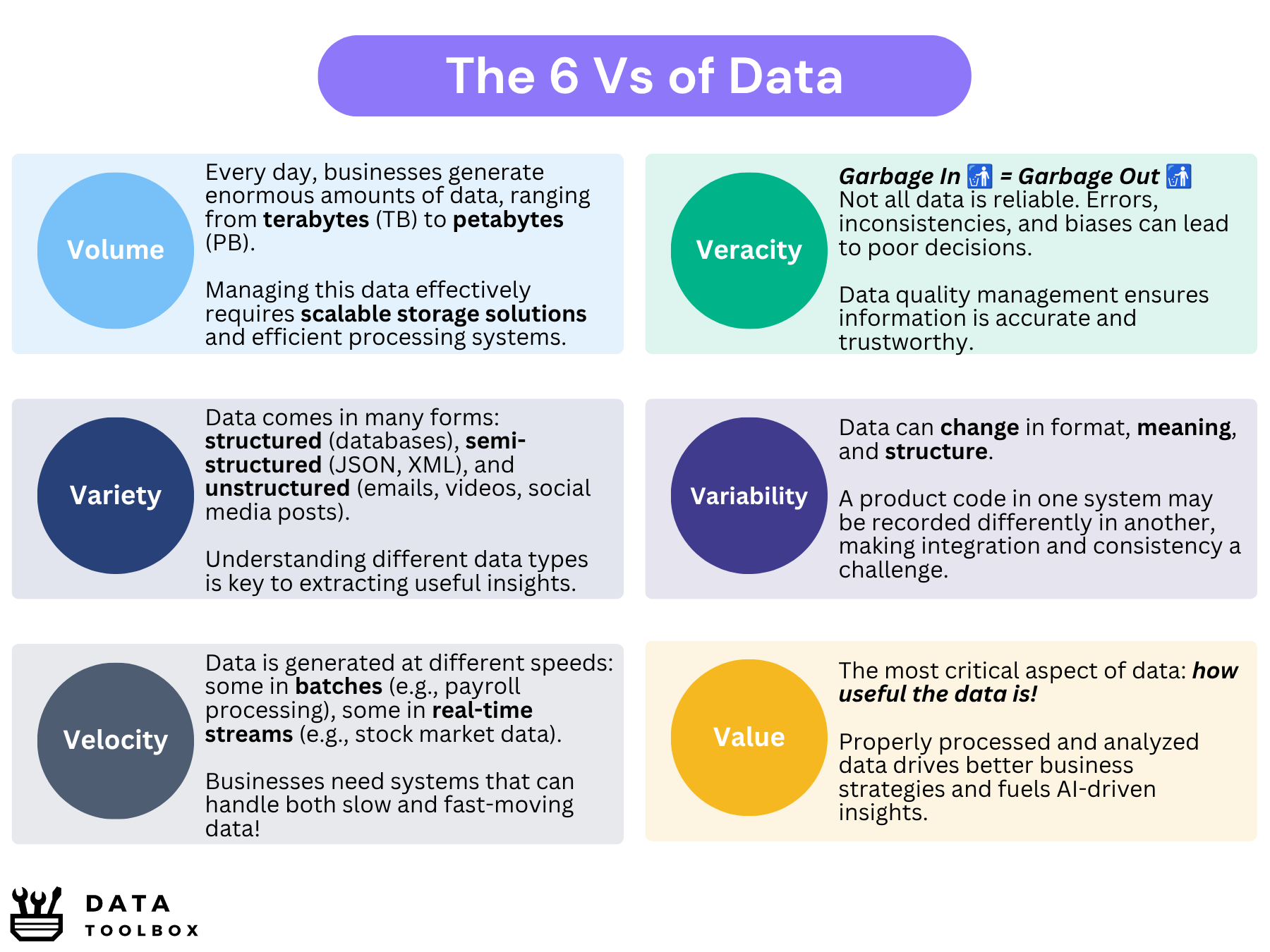
A good place to start is with the data itself. When people hear Big Data, they usually think about one thing: Volume. How much data do we have? But size is only one part of the problem. A relatively small dataset can still be difficult to use if it arrives too fast, changes structure every week, or simply cannot be trusted.
That is exactly why the 6 Vs were defined: to avoid looking at data through a single lens. They give us six different dimensions to describe data and understand the challenges that come with it:
The Data Lifecycle
Understanding the characteristics of data is one thing. Making that data usable is another. Raw data rarely creates value on its own: it needs to move through a series of stages before it can support reporting, analytics, or AI. This journey is what we call the Data Lifecycle.
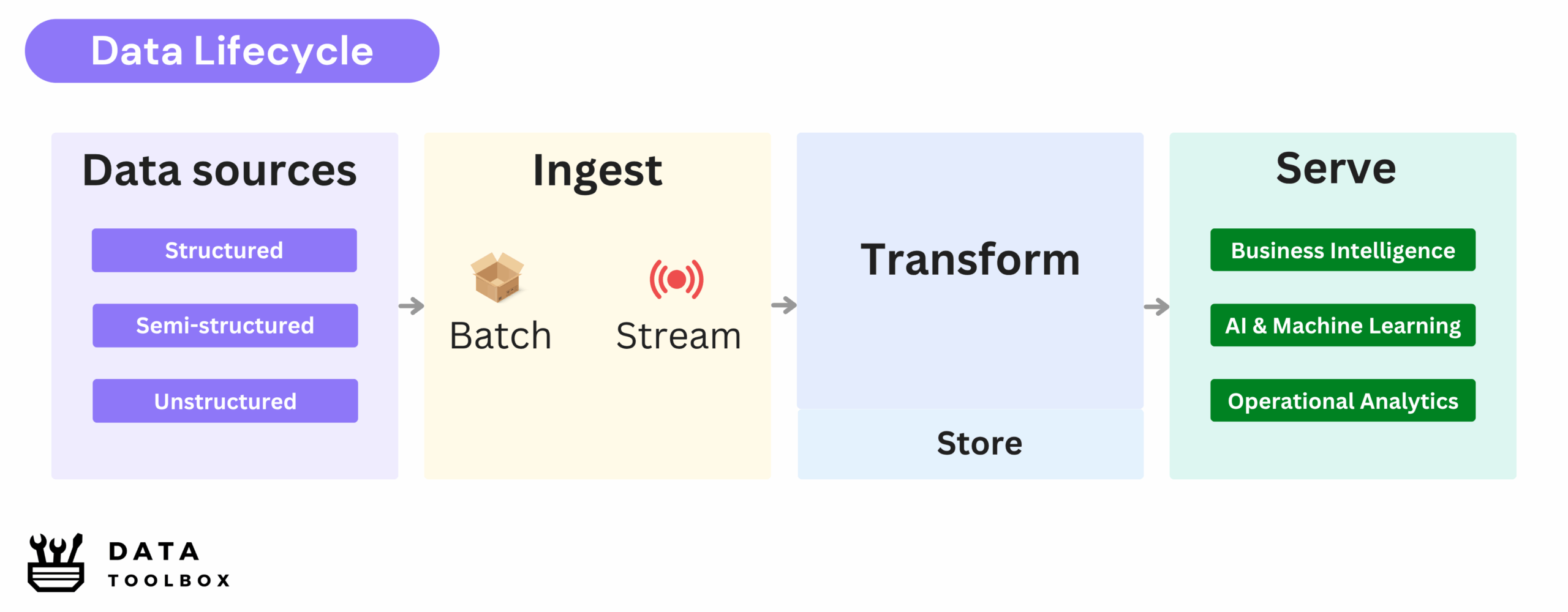
Let’s break down the main steps:
- Data sources: Data originates from various channels: websites, mobile apps, CRM/ERP, IoT sensors, etc. The first step is identifying what data matters most to business objectives.
- Ingestion: Moving data from its source to storage happens in two ways:
- Batch processing: Data is collected over time and processed periodically.
- Streaming: Data is processed in real-time, allowing businesses to react instantly to events.
- Transformation: Raw data is rarely ready for analysis. It must be cleaned, structured, and enriched while removing errors, organizing fields, and ensuring consistency.
- Storage: Data needs a place to be stored securely and efficiently. This can typically be done using data warehouses or lakes, depending on business needs and scalability.
- Serving: Processed data is made available for a range of use cases, including:
- Business Intelligence: Dashboards and reports for tracking historical and real-time performance.
- Machine Learning & AI: Algorithms analyze trends and patterns to make predictions and automate processes.
- Operational Analytics: Embedding analytical insights into business systems to enable real-time and data-informed decisions within day-to-day operations.
And in Reality?
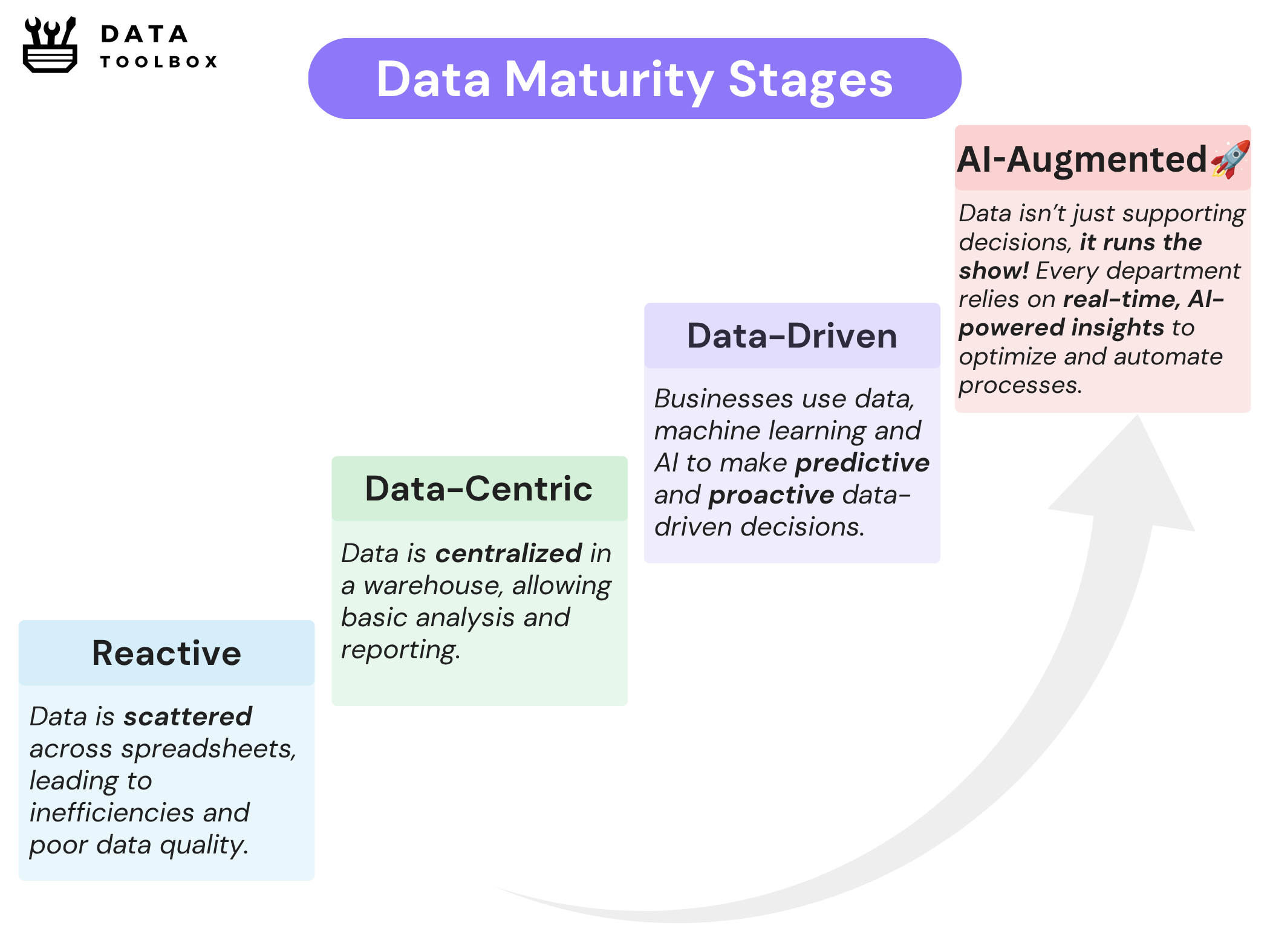
The lifecycle describes how data should flow. In practice, not every company manages these stages with the same level of maturity. Some have highly structured data platforms, while others still rely on manual processes and legacy infrastructure.
The reality is that businesses don’t go from “data mess” to “AI genius” overnight. They usually progress through different stages of maturity as their data practices, tools and ways of working improve. This journey can be simplified into the following stages:
The 5 Types of Analysis
Once data is reliable, accessible, and ready to use, the next question is simple: what can we actually do with it? This is where analytics and AI come into play. Depending on the question we want to answer, we can distinguish five main types of analysis.
- 1️⃣ Descriptive: What happened? Think dashboards summarizing past performance.
- 2️⃣ Diagnostic: Why did it happen? Digging into the causes, like a data detective.
- 3️⃣ Predictive: What will happen? ML models step in to forecast the future.
- 4️⃣ Prescriptive: What should we do? Algorithms suggest actions based on potential outcomes.
- 5️⃣ Cognitive: What would a human do? AI mimics human reasoning using techniques like natural language processing (NLP), optical character recognition (OCR), etc. Generative AI is here!
Each level builds on the last, helping businesses move from observation to action, and ultimately to automation. Without this layer, data is just numbers… But with it, data becomes power ⚡.
The Wrong Way to Do It
This progression may look straightforward on paper, but companies often try to skip straight to the most advanced stages, especially AI and Machine Learning. Sophisticated models and tools won’t fix poor data if the foundations described above aren’t in place first.
Common pitfalls include:
- Siloed Data: Different teams manage separate datasets, making integration difficult.
- Poor Data Quality: As we like to say in IT: Garbage In 🚮 = Garbage Out 🚮. Dashboards give wrong numbers. AI models hallucinate. And bad insights cost money.
- Misalignment with Business Goals: Collecting massive amounts of data without a clear strategy leads to wasted investments. Data should always serve a purpose aligned with business objectives. Align, or you will find yourself cleaning a messy data swamp 🐸 !
- Lack of Data Governance: Without proper policies on data access, security, and compliance, your business can face breaches, regulatory fines, and “beautiful” misuse of sensitive information.
Key Takeaways
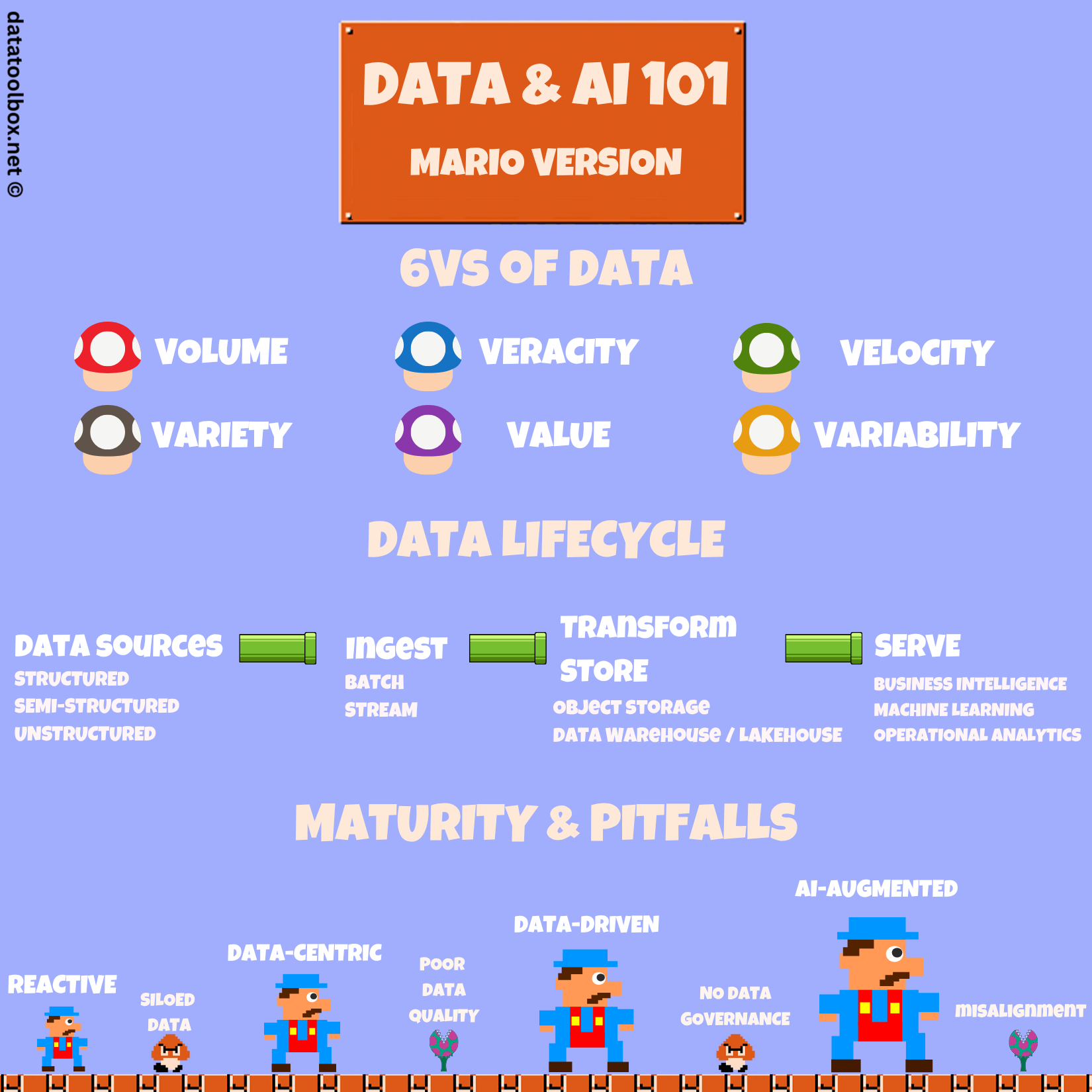
Yes, we truly love Data & AI 💘! It’s undoubtedly one of the hottest fields to work in today, but let’s not forget the fundamentals.
- Data is a business asset: Well-managed data leads to better decisions and competitive advantage.
- Data is more than size: Understanding the 6 Vs helps businesses extract real value.
- Skipping foundational data steps leads to failure: Businesses must establish strong data practices before diving into AI.
- A structured approach ensures long-term success: Companies that invest in well-managed data gain a significant competitive edge.
👉 If you’re looking to delve deeper into the world of analytics, you can read: Analytical vs Transactional: Why You Can’t Mix Oil and Water.